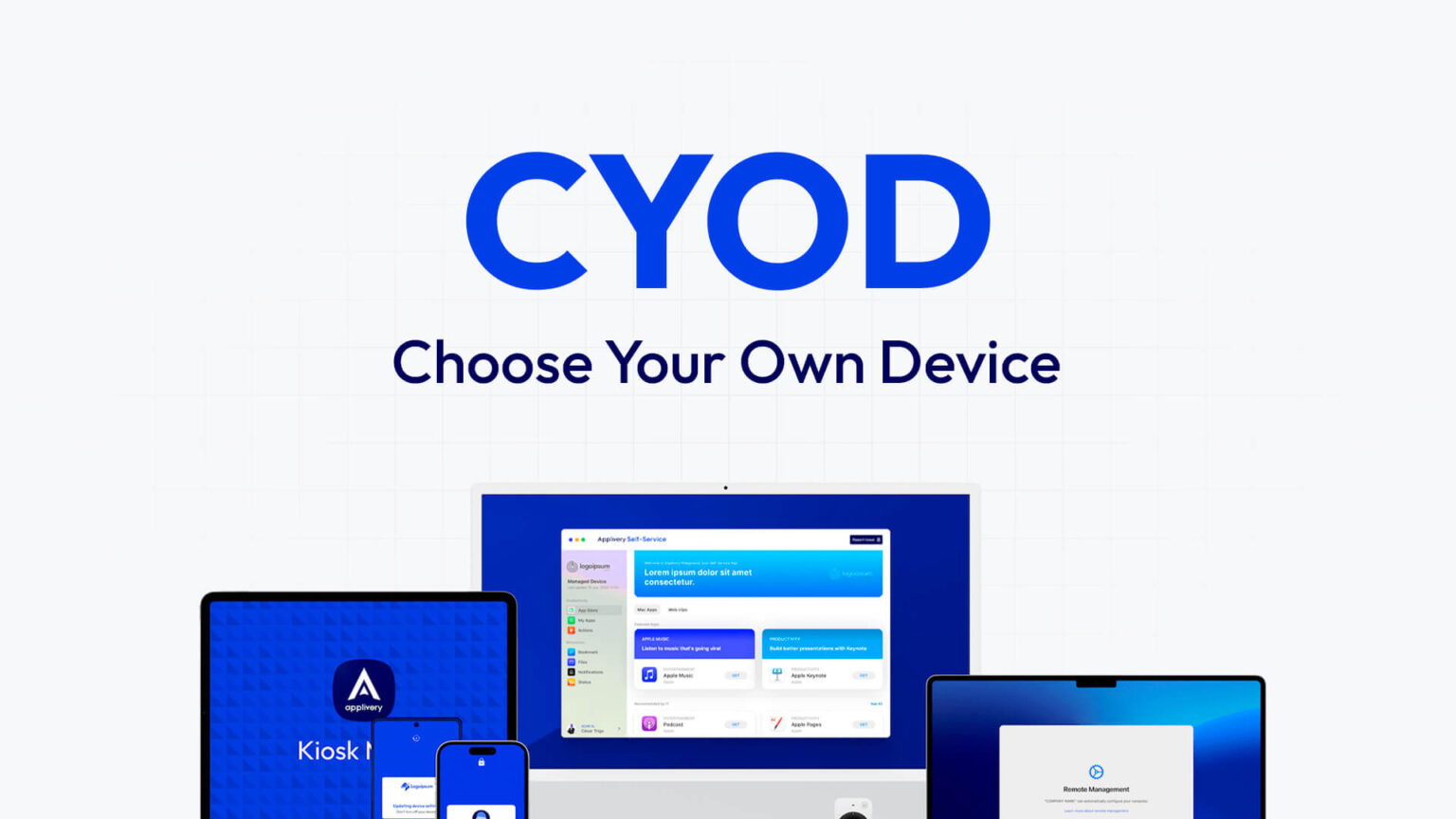
What is the CYOD model and how does it simplify device management?
The CYOD model simplifies device management by standardizing approved company-owned devices, reducing complexity to enhance security and IT efficiency.
What is the CYOD model and how does it simplify device management?
The CYOD (Choose Your Own Device) model reduces complexity in corporate networks by standardizing a catalog of approved, company-owned devices, improving security and optimizing IT operations.
Why is complexity considered the enemy of efficiency and security in device management?
In any engineering discipline, from software development to systems architecture, there is a universal principle: complexity is the enemy of efficiency and security. However, modern device management, driven by models like BYOD, has gone in the opposite direction, introducing a heterogeneous and difficult-to-manage environment into corporate networks. Faced with this reality, the CYOD (Choose Your Own Device) model emerges as a logical and pragmatic solution designed to reverse that trend. The CYOD approach is not based on imposing rigid control, but on applying an intelligent design principle: standardization. By defining a catalog of approved, company-owned devices, a diverse environment is replaced by a homogeneous and predictable one. The goal is simple: to deliberately reduce complexity in order to minimize security risks and optimize IT operations.
What is the cyod model based on simplification?
The CYOD approach is deliberately simple. Its goal is to replace a chaotic and diverse environment with an orderly and homogeneous one.
- Curated device selection: the IT department defines a catalog of devices that have been previously evaluated. This selection is not arbitrary; it is based on technical criteria for security, performance, and, fundamentally, on their ability to be managed in a unified way.
- Guided choice for the user: employees choose a tool from that approved list. This provides them with a modern and suitable device for their work, while ensuring that every device connecting to the network meets the standards defined by IT.
- Clear corporate ownership: since the devices are company-owned, any ambiguity regarding management is eliminated. IT has the necessary authority to configure and maintain the devices according to company policies, ensuring a consistent configuration across the entire fleet.
The result is a much simpler, more predictable technology ecosystem, and therefore, easier to manage and protect.
CYOD-Choose Your Own Device

How does cyod compare to byod in device management?
The choice of model defines the level of operational complexity that your department faces daily.
| Technical attribute | CYOD (Standardized Model) | BYOD (Heterogeneous Model) |
|---|---|---|
| Attack surface | Reduced and defined. Easier to protect known vulnerabilities. | Broad and unknown. Each personal device adds a new attack vector. |
| Support operations | Efficient and predictable. Support develops deep knowledge of limited hardware. | Slow and reactive. Constant learning curve with each new device. |
| Management and updates | Centralized and agile. Patches and updates can be deployed massively and securely. | Fragmented and slow. Depend on user action and device compatibility. |
| User experience | Consistent and high-quality. Reliable, high-performance tools for all. | Inconsistent. Productivity can be affected by personal device performance. |
What are the direct benefits of a simplified environment with cyod?
The decision to standardize through CYOD generates tangible and immediate benefits for the IT department and the company.
-
Reinforced and manageable security
By reducing hardware and software diversity, you directly reduce your organization’s attack surface. It is much simpler to monitor, patch, and defend a homogeneous environment than one where countless variables coexist. Standardization allows you to apply consistent and effective security policies. -
Optimized IT operations
Simplicity translates into efficiency. Your team spends less time solving compatibility issues or investigating incidents on unknown devices. This frees up work hours that can be dedicated to higher-value tasks, such as system improvements, automation, or innovation. -
A reliable and productive employee experience
Standardization guarantees a quality baseline for everyone. Employees work with reliable, high-performance tools that are fully integrated into the company’s ecosystem. This avoids the frustration caused by slow or incompatible personal hardware and ensures that the entire team has the means to be productive.
What is the role of a UEM in managing the cyod standard?
A standardized environment needs a centralized platform for its management. This is where a Unified Endpoint Management (UEM) solution like Applivery [https://www.applivery.com/unified-endpoint-management/] becomes indispensable. Applivery is the platform that allows you to implement and maintain that standardization at scale and effortlessly:
-
Consistent deployment
Ensures that every device in the CYOD program is configured in exactly the same way from the very first moment, automatically. -
Centralized maintenance
Apply updates, install software, and adjust configurations across your entire fleet from a single console. -
Complete visibility
Get a clear view of the status of your device fleet, knowing that all are operating under the same standards.
With Applivery, standardization is not just a goal, but an operational reality that is easy to manage and scale.

What is the strategic advantage of simplicity with the cyod model?
In a technological landscape where complexity continues to grow, the smartest decision is often the simplest one. The CYOD model represents that choice: a pragmatic approach to reduce complexity and, as a result, increase the security, efficiency, and reliability of your mobile ecosystem. It is not about limiting, but about deliberately choosing a simpler and more sustainable path. It is the logical approach for any IT department seeking to optimize its operations and offer a robust, high-quality service to its organization.
How do you find the right device model for your departments?
A one-size-fits-all approach doesn’t usually work. The most effective strategies often combine different models according to the needs of each department. Here’s how to choose the right model:
-
BYOD [https://www.applivery.com/blog/device-management/byod-accelerates-your-workforce/] is ideal for: Sales and Marketing teams that require high mobility and flexibility to work from anywhere.
-
CYOD (Choose Your Own Device) is ideal for: IT, Software Development, and Finance departments that handle sensitive information or require powerful and standardized hardware. In this model, the company provides employees with a limited selection of devices from which they can choose.
-
COPE [https://www.applivery.com/blog/device-management/what-is-it-and-which-one-to-choose-byod-cyod-cope-and-cobo/] (Corporate-Owned, Personally Enabled) is ideal for: upper management and other roles that need a balance between high security and personal flexibility. The company provides the device and maintains control, but allows for some personal use.
The challenge is to manage this diverse and hybrid environment without multiplying the work for your IT team. A flexible Unified Endpoint Management (UEM) platform that can handle these various enrollment types from a single console is essential for this strategy to work.
For example, Applivery is designed to manage BYOD, CYOD, and COPE models from a single, intuitive dashboard, giving you the power to choose the right model for each team and the unified control to manage them all efficiently.
Do you have questions about how to implement cyod in your company?
We know that every organization has its own challenges. If you want to discuss your specific needs for security, regulatory compliance, or how to plan a successful transition, schedule a free consultation.
[https://www.applivery.com/contact/]
One of our enterprise mobility specialists can help you answer questions and define the next steps to build a simpler and more secure technology ecosystem.
what are the fundamental differences between cyod and byod?
The key difference lies in ownership and standardization. In a BYOD (Bring Your Own Device) model, the employee uses their personal device for work. In CYOD (Choose Your Own Device), the company offers a list of approved devices, the employee chooses from that list, and the company purchases and owns the device. This allows IT to work with a standardized and known hardware ecosystem, instead of a heterogeneous and personal one.
who covers the costs in a cyod program?
Generally, the company covers the direct costs of the program. This includes:
- The purchase price of the device.
- Typically, the cost of the data plan associated with the device.
In return for this investment, the company gains in security, operational efficiency, and simplified management.
is cyod more expensive than byod at first glance?
It is important to differentiate between the initial cost and the Total Cost of Ownership (TCO).
- BYOD has an initial hardware cost close to zero, but its “hidden” operational costs are high and unpredictable. These include more technical support hours, greater security risks, and potential loss of productivity.
- CYOD has a higher initial hardware cost, but its long-term operational costs are lower and more predictable thanks to standardization, which simplifies support and security.
In the long run, a well-managed CYOD program can have a TCO equal to or lower than that of a BYOD environment.
how does the cyod model specifically improve security?
The security improvement is based on reducing complexity and standardization:
- Reduced attack surface: by managing a limited number of known device models, it is much easier to control vulnerabilities and apply security patches efficiently.
- Consistent policies: since the devices are company-owned, robust security policies (like full-disk encryption or multi-factor authentication) can be applied without the privacy conflicts that arise on personal devices.
- Application control: you can manage which applications are installed, creating a corporate software “whitelist” and preventing insecure applications.
is it necessary to implement a uem solution for a cyod program?
Yes, in practice, it is indispensable. A CYOD program is unmanageable to scale manually. A UEM platform like Applivery is the central tool that allows you to:
- Automate the deployment and configuration of new devices (Zero-Touch Deployment).
- Apply and monitor security policies centrally.
- Manage the lifecycle of corporate applications.
- Perform remote actions like locking or wiping data in case of loss or theft, which is critical for company assets.
how is cyod standardization balanced with employee satisfaction?
Although CYOD offers less freedom than BYOD, the impact on employee satisfaction is often very positive. Employees have the opportunity to choose a modern, high-performance work tool that suits their preferences from a quality selection. This eliminates the frustration of having to use a slow or unsuitable personal device for work tasks and guarantees them fast and effective technical support, as the IT team knows the hardware perfectly.
Applivery TL;DR:
- CYOD standardizes company-owned approved devices to reduce complexity and security risks.
- It delivers consistent user experience and simplifies IT support and management.
- Applivery’s UEM platform enables scalable deployment, maintenance, and visibility of CYOD fleets.